


Tom & Jerrys Militaria and Collectables
WW2 British .50 Cal (12.7mm) Inert Round – 1940 RA Z Headstamp Royal Arsenal (Copy)
WW2 British .50 Cal (12.7mm) Inert Round – 1940 RA Z Headstamp Royal Arsenal (Copy)
Couldn't load pickup availability

Product Condition
Product Condition
Shipping & Returns
Shipping & Returns
Shipping
We are unable to ship INERT ammunition outside of the UK
All orders are subject to a delivery, packing & handling charge. The correct charges will be automatically calculated via our Shopping basket ordering system and are based on the total weight of your order, your location, and our normal method of despatch. Please be aware that we reserve the right to alter any miscalculation, plus or minus, and you will be notified prior to shipping of any changes.
When shipping items, we use the UK Royal Mail, EVRI, DPD and Parcel Force in the event of a parcel arriving with contents damaged ALL the packaging must be kept for inspection by the delivering shipping contractor whoever that contractor is, failure to adhere to this WILL result in ANY claim being denied.
We do ship internationally and will always use a Tracked and Signed for service. We strive to use the best and most economical shipping services available
All shipping, insurance and import charges will be borne by the customer.
All lots are shipped at the buyers risk no compensation will be offered for items lost or broken in transit. Alternatively you can pay for your own courier.

Product Description
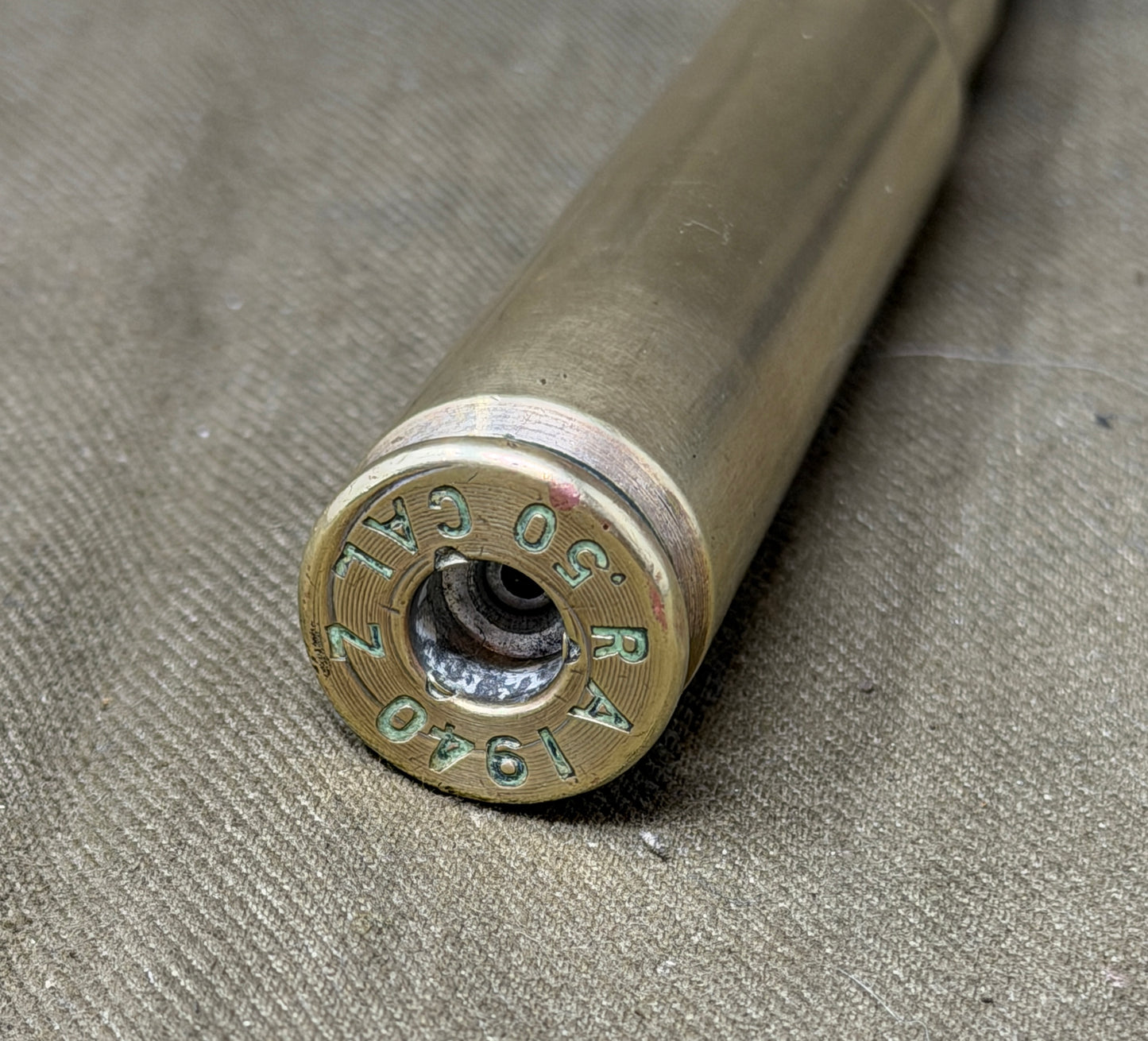
This original .50 calibre (12.7×99mm) inert round features a “50 CAL Z RA 1940” headstamp, identifying it as a genuine early World War Two production example manufactured at the Royal Arsenal, Woolwich, London. Dated 1940, this round represents one of the earlier British-produced .50 calibre cartridges from the opening stages of the war.
The Royal Arsenal played a key role in supplying ammunition to British forces, and early .50 calibre rounds such as this were produced as the calibre became increasingly important for aircraft armament and heavy machine gun use. The presence of the “Z” marking indicates the use of nitrocellulose propellant, a notable technical detail that adds further collector interest.
Compared to the far more common American .50 calibre rounds of the same period, British-made examples—particularly early-war dated pieces—are encountered less frequently on the collector market. This makes it a desirable addition for collectors looking for something with both historical significance and relative scarcity.
This example is completely inert and safe for display, with no active components. A genuine and increasingly sought-after piece of early WWII British ammunition history.